Address:
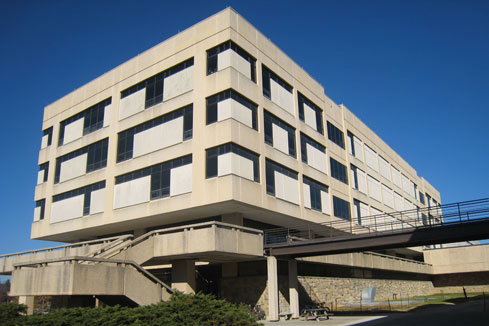
Bradley Department of Electrical and Computer Engineering
302 Whittemore (0111)
Blacksburg, VA 24061
Biography
Luke F. Lester,IEEE and SPIE Fellow, received the B.S. in Engineering Physics in 1984 and the Ph.D. in Electrical Engineering in 1992, both from Cornell University. He is a Professor and Head of the Bradley Department of Electrical and Computer Engineering (ECE) at Virginia Tech. Prior to joining VT, he was a professor of ECE at the University of New Mexico (UNM) from 1994 to 2013, and most recently the Interim Department Chair and the Endowed Chair Professor in Microelectronics there. Before 1994, Dr. Lester worked as an engineer for the General Electric (Martin Marietta) Electronics Laboratory in Syracuse, New York for 6 years where he worked on transistors for mm-wave applications. There in 1986 he co-invented the first Pseudomorphic HEMT, a device that was later highlighted in the Guinness Book of World Records as the fastest transistor. By 1991 as a PhD student in Prof. Lester Eastman's group at Cornell, he researched and developed the first strained quantum well lasers with mm-wave bandwidths. These lasers are now the industry standard for optical transmitters in data and telecommunications. In all, Dr. Lester has 28 years experience in III-V semiconductor devices and advanced fabrication techniques. In 2001, he was a co-Founder and Chief Technology Officer of Zia Laser, Inc., a startup company using quantum dot laser technology to develop products for communications and computer/microprocessor applications. The company was later acquired by Innolume, GmbH. He is an active organizer and participant in the IEEE Photonics Society's conferences, workshops and journals. He was a US Air Force Summer Faculty Fellow in 2006 and 2007. Dr. Lester's other awards and honors include: a 1986 IEE Electronics Letters Premium Award for the first transistor amplifier at 94 GHz; the 1994 Martin Marietta Manager's Award; the Best Paper Award at SPIE's Photonics West 2000 for reporting a quantum dot laser with the lowest semiconductor laser threshold; and the 2012 Harold E. Edgerton Award of the SPIE for his pioneering work on ultrafast quantum dot mode-locked lasers. He has published at least 125 journal articles and over 240 conference papers.